.jpeg)

Role of media in Functional Democracy
- Tarun Wordsmith
- Aug 15, 2022
- 5 min read

“Media acts just like the water in the democracy, it takes the same form as desired by the person holding it.”
-Tarun Tilokchandani
Media acts as an indispensable and inevitable part of any country and its role is further enhanced by its existence and development of trust in democracy. It acts as the connection between the government and the people lying even in the most remote areas of country.
Often considered as one of the pillar of democracy, but must never be considered as a part of democracy, as this may make media a part of politics that exists in a democratic country. It must always be the representor of the politics, because if the media becomes the part than this may be a severe threat to democracy. In such a situation there may be no difference between the democratic rule and a tyrant rule, raised by some of the ambitious men.
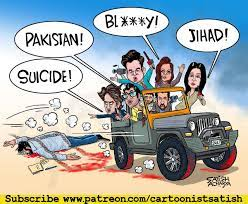
Non-independent media’s impact:
The water stored in the vessel can be used only for drinking and wiping the thirst of few and same is in the case of a non independent media. This can be easily used by some of the tyrants to fulfil their desires and be in the power.
The worst thing that can happen in this case is that even the people themselves don’t know that they are being exploited and nor does the other countries and international media. This happens when all the forms and channels of media are completely under government control. And this can be said as “secret censorship”.
It is by the means of media (television, radio, newspapers) that we come to know about the steps and the happenings done by the government indifferent parts of the country. And no information can flow easily from one area to another replacing the democracy with tyranny. This was the same situation that occurred in India in the state of Jammu and Kashmir when article 370 was removed and the state was formally joined in India. There was a complete ban on the flow of news from the state of J&K to any other, curtaining the human, fundamental and democratic rights of people of the state.
Another example that can be taken from our own country was the violence that took place after the 2021 elections of Bengal. The mass violence could never be covered by the electronic media and was very limited to social media. This situation was compressed to such an extent that till the date we do not know the exact number of casualties that took place in that region.
Though such matters later settle down in the name of maintaining the harmony and peace in country but these are the only incidences which become a spot on the democratic history of the nations like India.
These are the situations when the democratic harmony starts taking the place of “harm many”.
To be specific, these are not only the situations in India, but in the entire world such incidents can be noticed. There are some countries, where there is an extreme censorship imposed. Such as China, North Korea, Vietnam, Iran, Cuba, Saudi Arabia, Turkmenistan etc. These are the countries that even challenge “The Universal declaration of Human Rights” by banning or severely restricting the outflow of any form of media (even social media).
The claim of being democratic is not the index for consideration of independent media, but it is the vigilance of citizen that that make their country democratic.
The role of media in India:
But even after considering all the critics, the media is after all important in a democracy if utilized in the correct way. And in this era of technology, modernization and of social media it has become very evitable to reveal the real faces or to get the views of some important political scientists and philosophers on the certain matters and schemes launched by the central government.
But even after the rise of social media, there has been no decrease in the demand and importance of traditional media methods like that of radio, newspaper and television. Still ALL INDIA RADIO takes an important part in life of students and people of remote areas informing them about the ‘public centric programs and schemes by government’.
And still there takes a debate between various ideologists and stakeholders on the matters of national importance on television news channels. And even the method of advertisement is taken by government to spread awareness about the certain policies or diseases etc.
But misuse of media in India starts when the political parties start to use media for spreading their own ideologies. And if this is tolerable, the media is used for the defaming of the other opposite political leaders and their ideologies.
There must be an understanding that in such a diverse country like India, respect has to be given to each ideology, as each idea is unique in itself i.e. “capitalism can be said as important but socialism, on which a country is moving on for 70 years cannot be said as imperfect ideology”.
Critics and opposition have been laying a view with a term “Godi media” for the Indian media as being biased towards the current PM Narendra Modi. But this could never be proven anywhere due to lack of evidence.
Time to time, media in India has to face the claims of being partial by defaming the opposition political leaders or concentrating the media issues only towards:
· The plus points of ruling party
· And minus points of opposition party

Role of the independent media:
The independent media is supportive of both, the government and the common people. These are not those who get influence by the executive or ruling government but are those who stand with what is right. Often the independent and vigilant media is associated with those who, instead of working as promoters, work as the criticizers. These are who bring the positive as well as negative points of programs and steps government in front of people.
The independent media instead of promoting the party promotes democracy, at domestic as well as international level. For this a lot has to be done in the world o increase the dignity of the journalists. There has to be awareness about their jobs, duty and support towards nation building.
Aspirations for improvement of media:
The first and foremost aspiration that is expected to be followed by the media is to be unbiased, legitimate, and accountable to a certain extent.
The accountability of media must not be towards the government but towards the people of the country. By this it is meant that enough precautions and checking must be laid in terms of illegitimate or fake news.
The pressuring by some of the leaders or by government must be ignored, and a realization must be there of the rights, whether it be fundamental or universal.
The media must act as a linking passage of the government and if the people where it tells government the aspiration of people and convey people the policies of the government.
“The media must not be there to wait for any change; it must a medium to bring the change.”

Comments